Evaluation of EuroVelo 10 – Baltic Sea Cycle Route: more than 2,600 km surveyed with ECS in less than a year!
Why this record-long assessment along EuroVelo 10?
EuroVelo 10 – Baltic Sea Cycle Route is a historic route, part of the first twelve routes of the EuroVelo initiative, officially launched in 1997. EuroVelo 10 is a circular route going around the Baltic Sea, currently covering over 9,000 kilometres across ten countries.
The Baltic Biking Upgrade project kicked off in 2023 with a double objective: supporting SMEs in creating new cycling-friendly offers and strengthening the development and governance of EuroVelo 10 with closer transnational cooperation and long-term planning.
One of the cornerstones of the project was the collection of new data on the quality of the route and services located on the southern Baltic section. This key activity was led by ECF, drawing on its expertise as the developer of the European Certification Standard (ECS) – the leading methodology in Europe for assessing cycle routes, which covers infrastructure, services and marketing and promotion.

A two-year long process
The first step of this process was the EuroVelo Route Inspectors Training 2024, held in Brussels, where project representatives learned about the quality criteria as well as how to practically use the ECS tools to assess route quality – both on site and during the subsequent data analysis and reporting phase.
The second step consisted in organising the surveys in the five countries covered by the project: Sweden, Lithuania, Poland, Denmark and Germany. While some countries already had experience with ECS, for others this was their first opportunity to apply the methodology.
The surveys were carried out between July 2024 and June 2025, involving twelve EuroVelo Route Inspectors, each responsible for a defined section of the route. Following the on-site assessments by bicycle, the inspectors did some additional desk research and thorough data analysis. The inspectors then drafted their national or regional chapters, detailing the strengths and weaknesses of the route. Their reports cover all aspects assessed under ECS, including route continuity, traffic levels, surface quality, availability of services, and the quality of both online and on-site communication, including signposting.
In the second half of 2025, ECF reviewed those reports, provided recommendations for improvements, and consolidated them into a comprehensive transnational report. The final publication – now available in the Resources section of pro.EuroVelo.com – spans more than 350 pages, detailing the assessment of more than 2,600 km of route and listing black spots and areas for further development.
Main highlights from the Transnational Route Evaluation Report
Overall, the South Baltic part of EuroVelo 10 is highly qualitative with a majority of the route being traffic-free and 82% of the route being on perfect or good quality surfaces.
Due to its coastal nature, the route features very few climbs. It is predominantly flat, but also occasionally windy due to its proximity to the sea.
Most parts of the route follow the coastline or remain in close proximity to it, which is highly attractive for the route. There are also many cultural and natural attractions, including museums and UNESCO sites as the Curonian Spit, the Malbork Castle, the Sowiński National Park, the old harbour of Wismar, the Old Town of Lübeck, and the Hanseatic cities of Stralsund and Karlskrona.
Accommodation and food can be easily found in all surveyed regions, with a range of services labelled as cycling-friendly, meeting the specific needs of cyclists.
The Baltic is one of the most popular cycling routes in Poland and Germany, making EuroVelo 10 one of the hotspots for “coolcations”. As a result, it can be quite challenging to book accommodation in some places during the holiday season. The high route usage even leads to conflicts between pedestrians and cyclists in West Pomerania, making the case for wider and separated infrastructure between cyclists and pedestrians.

Potential for further improvement
The main area for improvement is EuroVelo signposting, which is completely missing in Germany and Sweden; EuroVelo signs must be updated in Lithuania to match EuroVelo branding rules, and it could be further detailed in Denmark along with some marginal improvements in Poland. The positive side is that national signage is often enough to navigate the route, even if we recommend downloading our official GPX tracks as well. The route would also benefit from more regular information boards and centres.
Another opportunity for improvement lies with the promotion of EuroVelo 10. In many cases, national or regional websites lack references to the official name of the route: EuroVelo 10 – Baltic Sea Cycle Route and link to EuroVelo.com. This would greatly reinforce the international awareness of the route and its popularity.
Other regular challenges listed are the insufficient width of cycling infrastructure, some high-traffic sections, especially in Lithuania, some problematic surfaces – long cobblestones stretches in East Germany and badly rideable sections in forests and fields, mostly due to poorly maintained roads and cycle- and pedestrian paths on the island of Rügen. Additional rest areas would also be necessary, with public fountains and toilets. Cliffside erosion was also encountered on the Western coast of Germany, raising questions on the maintenance of coastal cycle paths in the face of climate change.
In the words of the EuroVelo Route Inspectors
“I know the route and its challenges well, but thanks to the survey we now have a detailed, objective document which I hope will make it easier for us to advocate for improvements and address the route’s shortcomings. An additional major benefit of the BBU project is that the survey was carried out along a long section of the route. This allows us to gain knowledge about the quality of other sections and to see how we perform in comparison to others. Such benchmarking is always a strong motivation to further improve quality" - Wanda Nowotarska, Regional Cycling Officer, Marshal Office of the West Pomerania Region
"For me it was good to go on our route, which we throughly know from everyday work, and verify it using external unified standard. Fortunately it confirmed what we already know, about weak points on the route.” - Wojciech Grela, Office for Cycling Communication of Marshal Office of the West Pomerania Region
“The revelation was that I used to see a stretch of road surface and a view. But now with the ECS methodology, I see so much more. The methodology is useful to measure road safety, attractiveness and bikeability in so many more ways than to survey EuroVelo routes and is a good complementary method to the national standard in for example Sweden. The unique factor is the actual field study, which any route developer can benefit from.” - Anna Linden, Cykelfrämjandet project manager and EuroVelo Route Inspector in Sweden
"Where EuroVelo 10, the Baltic Sea Cycle Route, overlaps with Swedish national routes such as “Sydkustleden”, high-quality infrastructure and services are already in place. Adding the EuroVelo 10 brand to existing national signage, as well as to marketing and promotion, would greatly enhance the appeal of the route to an international target audience.” - Henk Swarttouw, ECF President and EuroVelo Route Inspector in Sweden and Germany
"My experience from route evaluation was seeing a part of Sweden I'd never visited before, despite having lived here for 28 years. Experiencing the landscape by bicycle really lets one appreciate the natural and cultural heritage of a place at a pace that permits contemplation." - Hans Stoops, IMBA Europe Advocacy Officer
"Being a EuroVelo Route Inspector is about much more than technical assessment. It is an opportunity to truly experience a route The application used during inspections supports this process by helping structure observations, while also encouraging a more attentive and thoughtful way of looking at the surroundings. The combination of outdoor work, real impact on cycling infrastructure, and the use of smart, supportive tools makes the role of a EuroVelo Route Inspector both engaging and rewarding — and an important part of shaping better cycling routes for the future." - Tomasz Legutko, Tourism Development Unit, Marshall Office of Pomerania Region
“The survey helped me to get the full picture of the Baltic Sea route in Lithuania. The route is very attractive, and has lots of things on why foreigners should try it. The more I study it, the easier it is to recommend changes for fixing its issues - now the ball is in ministries and municipalities hands. Happy to help them." - Paulius Bakutis, President of the Lithuanian Cyclists Community and EuroVelo Route Inspector in Lithuania
“Surveying cycling routes is the best part of our job. Why? Because we like to cycle. But it is also an important part of our job, because good cycling routes are fundamental to great cycling experiences and in the end more cycle tourists.” - Jesper Pørksen, Director of Danish Cycling Tourism, Chair of the EuroVelo Council and EuroVelo Route Inspector in Denmark

-
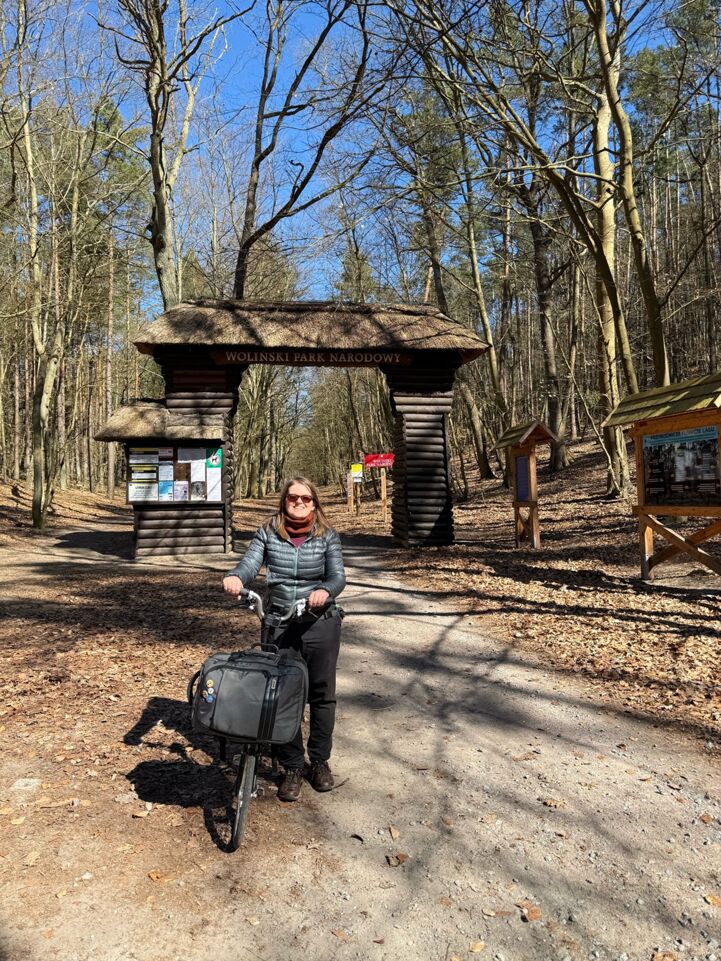
Wanda Nowotarska -
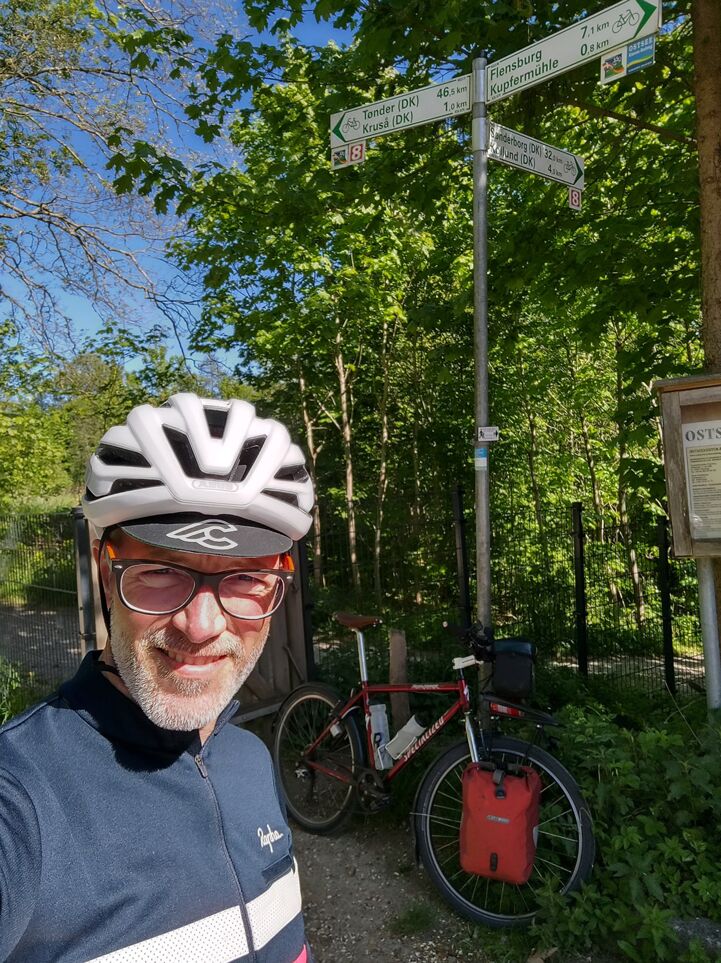
Jesper Pørksen while surveying EuroVelo 10. -
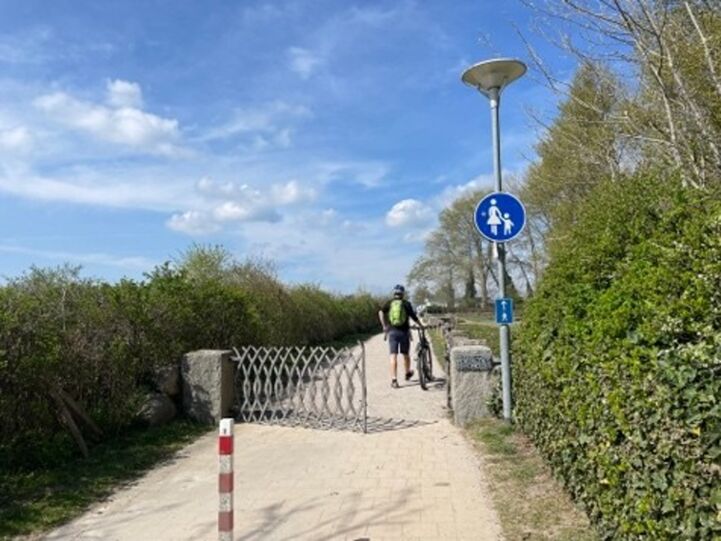
EuroVelo 10 in Neustadt in Holstein – Großenbrode Marco Berends -
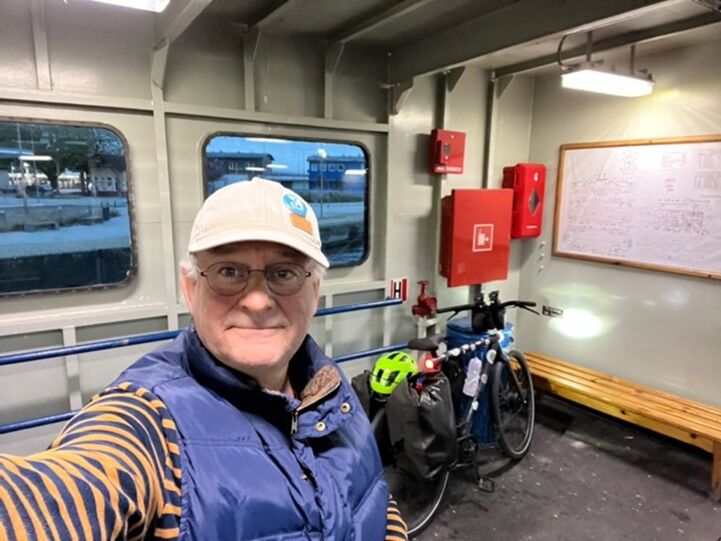
ECF president Henk Swarttouw testing multimodality on EuroVelo 10. -
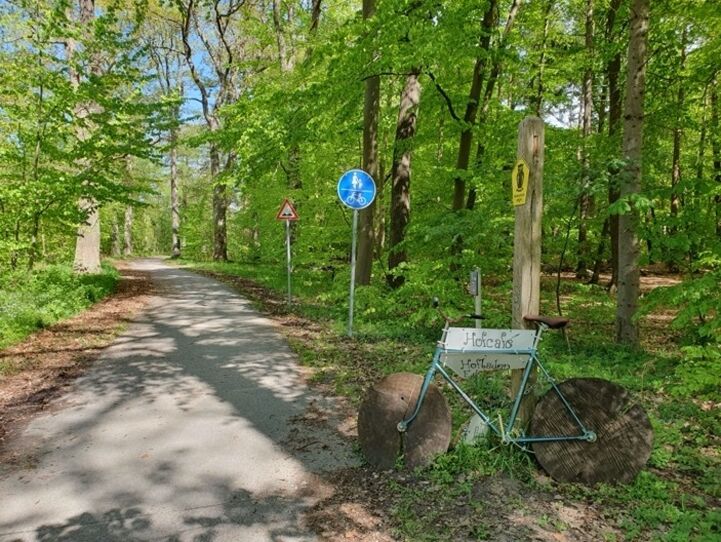
EuroVelo 10 North of Rostock Henk Swarttouw -
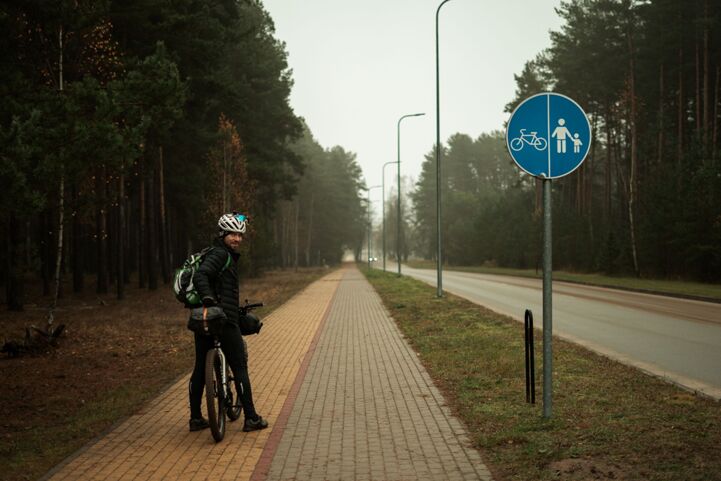
Paulius Bakutis picture.jpg


What’s next?
This detailed report can now serve as a basis to guide improvements and future investments with the aim of increasing route quality.
Public authorities are invited to have a closer look at the parts concerning their municipality, region or state in order to better understand the most important areas for improvement and supporting the prioritisation of future investments.
This will only lead to an even more qualitative route and popular cycle route, paving the way to attract more cyclists, which will benefit local and regional SMEs and the social and economic development as a whole.
Would you like to learn how to apply the ECS methodology and become a EuroVelo Route Inspector? Registrations for the next edition of the training taking place in Brussels on 14-15 April are open!
Author: Alexandra Fournier
